Showing posts with label Prisons. Show all posts

Wednesday, February 1, 2012

Scandal in Lock Down Mode: Rick Perry and the Texas Youth Commission 3/3

by Nomad
Scandal in Lock Down Mode
Part One
Part Two

All tyranny needs to gain a foothold is for people of good conscience to remain silent.
Thomas Jefferson
Severe Consequences 
George Bush
The origins of the Texas Youth Commission problems actually began as a result of fear-mongering campaign tactics about the rise of violent juvenile crime during George Bush’s 1994 run for governor. In one of his campaign ads, Bush told voters,
"The bottom line is young people need to understand there will be severe consequences for bad behavior."
(This tough talk about crime and punishment is somewhat ironic given the later events.) Some may argue that playing upon the fears of the public was to be merely a dress rehearsal for the anti-terrorism campaign following the hysteria caused by the 9-11 attacks. 

But then you don't mess with success. After all,  the “tough on crime” position had also worked for his father in his own the presidential campaign. The “revolving door” advertisement, produced by political consultant Roger Ailes, had been considered a major factor in Bush’s defeat of Michael Dukakis in 1988. Following those ads, the percentage of poll respondents who felt George Bush, Sr. was "tough enough" on crime rose from 23 percent in July 1988 to 61 percent in late October 1988. Being tough on anything always plays well with Texas voters.

In order to fulfill that campaign promise, Bush would go on to nearly triple the size of the Texas youth corrections system, increasing the number of youthful offenders in state-run facilities from 1,800 to over 4.550 by the time of his presidential swearing-in in 2001. The Houston Chronicle weighs in with this:
Legislators and youth advocates say that system expansion overtaxed an agency bureaucracy, aggravated problems with staffing TYC facilities and set up a breakdown that occurred after major cuts were made to the agency's budget in 2003.
"The agency probably grew too fast based on Governor Bush's commitments of being more proactive in the enforcement of youth," said Sen. John Whitmire, D-Houston, chairman of the Senate Criminal Justice Committee.
There were supposedly many contributing factors to the problem. Perhaps they were, but was it merely a case of incompetence by one governor followed by neglect and careless budget-cutting by another?
The TYC administration and board were inadequate to handle problems with the expansion. Remote locations of many TYC facilities made it difficult to hire and retain staff. The buildup brought in more children with mental problems. Open dormitory settings allowed older youths to become predators of the younger inmates and to organize their dorms against the guards.
And the state's political leadership — both Gov. Rick Perry and the Legislature — was slow to recognize the growing crisis because the focus was on adult prisons while the juvenile system ran on autopilot.
A harsh assessment, to be sure, but even this glosses over another important factor. Something that, for good reason, nobody really wanted to discuss. It requires peeling one more layer back from the onion to reveal that "lone why." 


The Geo Group
To get to the reasons why problems with the TYC could have gone on for so long and to have been so successfully ignored, one has to zoom out and take an even larger view. 
It had to do with exposure-which if you have something to hide, is not a good thing.
The Geo Group a private company, one of about a half dozen, that operates prisons, juvenile justice centers, psychiatric hospitals and immigration detention centers all over the world,  and has big business in Texas.  The corporation runs 19 correctional facilities in Texas, including nine under contract for the Texas Department of Criminal Justice. Here is a map of the other privately-run facilities in the USA.
Geo Group Facilities in the USA
As a multi-national service provider for government, The Geo Group has found the management of correctional, immigration detention, and mental health facilities to be a highly lucrative enterprise. With 20,000 employees, and a revenue in 2010 estimated at $ 1.27 billion, the corporation operates in North American South Africa, the United Kingdom and Australia. It operates more than 50 facilities in the United States including five mental health facilities in Florida.
And make no mistake, there’s money to be made keeping people locked away. With 2.3 million people behind bars and an estimated 10 million Americans cycling in and out of correctional facilities each year, the United States is in the midst of an "epidemic of mass incarceration," say researchers from the Center for Prisoner Health and Human Rights, a collaboration of The Miriam Hospital and Brown University.
As NPR reports:
On any given day, there are 1.6 million people serving sentences in state and federal prisons. Eight percent of them are in facilities operated by private companies. In the federal detention system, more than 16 percent of detainees are held in private lockups.
This proportion is projected to grow. According to industry leader Corrections Corporation of America [CCA], no state has allocated money to build new state-run prisons in the last year because of budget crises. So some state governments are turning to the private sector to house their prisoners. The private corrections industry maintains that it can build and start up prisons faster, and incarcerate inmates more cheaply than state-run facilities.
Based in Boca Raton, Fla., Geo Groups Inc. — formerly Wackenhut Corrections -— is competing with CCA for new contracts. Since 2009, GEO has acquired 7,600 new prison beds, a growth of 10 percent, according to a GEO annual report.
GEO spent $2,065,000 on lobbying between 1999 and 2009. The three major lobbying firms under Geo are Lionel "Leo" Aguirre, Winston & Strawn, and Dykema Gossett. 
Geo Group had had a notorious record when it won the contract with TYC. The record in Texas at the time of the West Texas School case was evolving is hardly confidence-inspiring, as this source reveals. As the writer notes:
The list is long enough and filled with enough serious incidents that it makes me wonder why GEO continues to earn lucrative contracts like the three new Texas contracts .... One reason might be the high-priced lobbyists and former state officials that GEO keeps employed. 
As far as a private-sector solution to the economic shortfalls, Geo Group's relationship with the Texas Youth Commission left a lot to be desired. Regardless of that detail, it was making somebody a lot of money.


If Texas Were A Country
In a study released in 2007 by the Washington, DC-based Justice Policy Institute found that one out of every 20 adults in Texas were either in prison, jail, on probation or on parole. There are more people in prison in Texas than in any other state, and Texas' incarceration rate is second only to Louisiana. The report found that:
If Texas were a country, it would have the highest incarceration rate in the world, easily surpassing the United States and Russia, the next two finishers, and seven times that of the next biggest prison system in China.
The prison population in Texas has gone from 29,892 in December 1980 to an astounding 172,116 by December 2006. Stated Vincent Schiraldi, the Institute's Director and report co-author:
"The sheer numbers of people in prison and jail in Texas are signs of system fixated on punishment, and devoid of compassion."
It's easy to say that this is the means to deal with crime, but is that actually true? Let's compare New York's prisons and Texas' prisons in the same period.
While Texas had the fastest growing prison system in the country during the 1990s, New York had the third slowest growing prison population in the US. Over all, during the 1990s, Texas added five times as many prisoners as New York did (18,001).Yet since 1995, the study found that New York's decline in crime was four times greater than Texas' decline in crime. Texas' current incarceration rate (1,035 per 100,000) is 80% higher than New York's (574 per 100,000), yet Texas' crime rate (5,111 per 100,000) is 30% higher than New York's (3,588 per 100,000). In 1998, Texas' murder rate was 25% higher than New York State's rate.
Not only are there more people in prison but the ones in prison are more often than not non-violent offenders.Given those facts, it's clear that incarceration is a big business in the Lone Star State.

The Hungry Beast
In 2010, the two largest private prison companies alone received nearly $3 billion dollars in revenue, and their top executives, according to one source, each received annual compensation packages worth well over $3 million. The privatization of the prison system, by its nature, is a hungry beast. 
As an ACLU report explains that while the incarceration rates climb ever upwards, the private prison industry expands at exponential rates, holding more and more people in its prisons and jails, and generating massive profits. Private prisons for adults were virtually non-existent until the early 1980s, but the number of prisoners in private prisons increased by approximately 1600% between 1990 and 2009.
One problem, however, despite what two out of five Americans think, violent crime is not on the rise; it's actually on a steep decline. According to the FBI, property crimes are down too. Yet the prison population is still on the increase. 
So, is this merely a sign that the prison system is effective at stopping crime? Not quite. There's something more to it.
According to ACLU, the two leading industry companies, Corrections Corporation of America (CCA) and the GEO Group, received a combined $3 billion in annual revenue in 2010. According to the report, the CCA acknowledged in records submitted to the Securities and Exchange Commission that current sentencing laws increase the company’s profits.
Thus, the toughest possible approach to crime means maximum profits for the private incarceration corporations. The ACLU report goes on to say:
Leading private prison companies essentially admit that their business model depends on high rates of incarceration. For example, in a 2010 Annual Report filed with the Securities and Exchange Commission, Corrections Corporation of America (CCA), the largest private prison company, stated: "The demand for our facilities and services could be adversely affected by . . . leniency in conviction or parole standards and sentencing practices . . . ."
The Southern border states are especially appetizing for corporations like Geo Group. Why, you might ask?
In August (2011), when GEO, the Florida prison company, posted a 40 percent rise in second-quarter profits, its executives in Boca Raton spoke of new immigration business on both sides of the Atlantic.
John M. Hurley, a GEO executive for North American operations, cited "the continued growth in the criminal alien population," larger facilities, and longer federal contracts, some up to 20 years.
A source  supplies the details: 
Since the late 1990’s, the number of people held in immigration detention has exploded. On any given day, ICE detains over 33,000 immigrants; this is more than triple the number of people detained in 1996. In the last 5 years alone, the annual number of immigrants detained and the costs of detaining them has doubled: in 2009, 383,524 immigrants were detained, costing taxpayers $1.7 billion at an average of $122 a day per bed. Nearly 2.5 million individuals have passed through immigration detention facilities since 2003.
And, and for the private prison operators,  immigrants, like children, have few if any civil rights to fret over. Practically everybody benefits. Politicians can win votes by taking a tough stand on the immigration problem. Profits can be made by corporations. Nearly everybody gets something out of the neat arrangement. 
The influence of private prison operators, like Geo Group, affects state governments in a number of ways. Firstly, its lobbyist can influence any legislation which increases incarceration rates. Secondly, it can effectively discourage the necessary oversight by government agencies. Direct or indirect conflicts of interest can call into question politician’s motives. As Detention Watch Network warns:
These deep connections between corporate and government actors raise concerns about the extent to which private industry is dictating policy in an area where the lives, liberty and basic rights of hundreds of thousands of people are at stake.
As a Texas Watchdog Group found, Geo Group maintains close relationships with Texas lawmakers. Two state legislators, State Senator, Judith Zaffirini, D-Laredo and state Rep. Rene Oliveira, D-Brownsville had financial links to Geo Group. For example, Zaffirini’s husband, Carlos, had been a lawyer and advocate for the firm. Ms. Zaffirini denied knowing anything about Geo Group and its scandals, despite the fact her husband had worked for them.
“I quite frankly have not given private prisons a lot of thought," she says. "I spend most of the time focusing on the issues of the poor, the elderly and people who can’t represent themselves."
Quite a defense. Of course, despite her professed compassion, that altruism doesn't seem to extend to unrepresented prisoners, especially sexually abused juveniles. It is simply not a "tough stand" and isn't likely to win much approval with many Texas voters.
Oliveira, meanwhile, also has a cozy relationship with the prison company. His Brownsville law firm serves as its local defense counsel.
"The private prison industry is dependent on taxpayer dollars," says Alex Friedmann, the associate editor of Prison Legal News, a newsletter dedicated to protecting inmates' legal rights. "So, yes, I believe Zaffirini and Oliveira have a conflict of interest, or at least a perceived conflict of interest."
In fact, that appearance of conflicted interests is really nothing to be too concerned about. A red herring, in fact, Geo Group has a lot more influence on Texas politicians with its teams of professional lobbyists.
Need proof? Then, let's see what occurred when public outrage turned to political action.

Unscathed
After the West Texas School scandal, the public reaction demanded greater scrutiny of all TYC facilities. What the inspectors found in both the state-run and the privately-run facilities would shock them. The agency officials closed GEO's Coke County Juvenile Justice Center saying they'd found atrocious conditions there. 
Senate Criminal Justice Committee Chairman John Whitmire (D-Houston) told reporters "They've run a very poor facility that probably violates the youths’ civil rights. Kids were stepping in their own feces. The sheets were such that a cat or dog wouldn't sleep on them."
Then in April 2009, a high court upheld a massive judgment against the GEO Group after an inmate was fatally beaten at another one of its prisons. The Texas Tribune gives other examples:
...[A]n inmate at GEO's Dickens County prison facility slashed his throat, leaving letters complaining of blood-coated blankets and pillows, and floors and walls covered in mold. In 2006, a woman killed herself at a GEO jail in Val Verde County, after complaining that she had been raped by another inmate and sexually harassed by a guard.And in early 2009, inmates at GEO's Reeves County Detention Center started fires and took hostages to demand better health care. Later that year, a Texas appeals court upheld a $42.5 million verdict against the company for the 2001 death of an inmate four days from finishing his sentence at a Willacy County facility. The man was beaten to death by other inmates using padlocks stuffed into socks.
And keep in mind, this was in Texas alone. 
After an unrelenting series of Geo Group scandals, Democrat lawmakers in Texas came to the capital with a mission. They authored six separate bills, aimed at independent oversight and accountability private prison companies. It seemed like a good step forward. 
What happened next? Here’s what Matt Pulle, reporter for Texas Watchdog found:
But in a remarkable turnaround for the corrections outfit, if not the entire troubled industry, not a single anti-private prison bill passed. In fact, none of the measures even received a floor vote. Despite an ongoing bout of bad press and public mishaps, the GEO Group emerged unscathed this legislative session thanks to a team of high-dollar lobbyists with deep roots in state government.
It would seem all the factors has come together- a perfect storm- determined legislators, the public outcry about the horrendous abuse of children. Everything needed for sensible and conclusive reform. And yet... nothing.
"At the beginning of the session there were several people who were rightfully outraged by what happened over the last two years," says Bob Libal, the Texas campaigns coordinator for Grassroots Leadership, a social justice organization that opposes private prisons. "So for there to be nothing to come out of this session out of six or seven good thoughtful bills that would have just provided basic accountability, it's really sad. And it really speaks to the private prison industry and the amount of influence they have."

That is particularly true of the GEO Group and its mental health unit, GEO Care, which shelled out a maximum of $370,000 this year on lobbyists in Austin, neatly coinciding with the company's slate of troubles that made national news. Meanwhile, its rival, the Nashville-based Corrections Corporation of America, spent a maximum $50,000, according to records on file with the Texas Ethics Commission. Both prison companies do comparable business with the state, with each firm operating all or part of at least nine state facilities.
Leaving nothing to chance, Geo Group reportedly donated $15,000 into Perry’s 2010 reelection effort through its political action committee. Luis Gonzalez, a GEO Group lobbyist, meanwhile, gave $50,000 to Perry’s reelection bid.

Not Alone
In fact, Rick Perry, as a governor in good standing with the private prison corporations, is certainly not alone. As ThinkProgress reports:
Arizona Gov. Jan Brewer
Two of Arizona Gov. Jan Brewer’s (R) most senior aides are current or former lobbyists for private prisons, and this industry stands to earn a windfall off the anti-immigrant SB 1070 law that Brewer recently signed.
As NPR later reported, this controversial law was largely conceived and drafted by a conservative business lobbying group in Washington, D.C.known to most people as American Legislative Exchange Council, or ALEC. Corrections Corporation of America, the largest private-prison operator in the US, had crafted the precise language and provisions contained in this anti-immigration bill. As NPR’s Laura Sullivan revealed,
Once the language was introduced, the influence of private prison companies intensified. NPR reports that 30 of SB 1070’s 36 co-sponsors received campaign contributions from lobbyists of three major private prison companies including CCA, Geo Group and Management and Training Corporation.
The reason for pushing this questionable legislation is obvious. 
According to Corrections Corporation of America reports reviewed by NPR, executives believe immigrant detention is their next big market. Last year, they wrote that they expect to bring in “a significant portion of our revenues” from Immigration and Customs Enforcement, the agency that detains illegal immigrants.
Other governors are also sharing the same cozy bunk with the prison industry, according the ThinkProgress article.
Florida Gov. Rick Scott (R) turned over $600 million in corrections funding to the private prison industry after one private prisons company doled out hundreds of thousands of dollars to Scott and the Florida GOP.
According to one source, Geo Group operates four federal prisons in Florida. In that state alone, Geo Group gave $705,000 in campaign contributions, and Geo Care, a wholly-owned subsidiary of Geo Group, gave an additional $117,415. And this was only one of several corporations in the industry involved. As a whole, the private-prison industry tends to court the Florida Republicans more than the Democrats. giving $783,494 compared to $143,000 to the Florida Democratic Party.
And Ohio Gov. John Kasich (R) plans to sell five of its prisons to a private company. Meanwhile, the private prisons industry has spent millions to lobby state lawmakers to make criminal laws harsher in order to drive up their profits.
Yet while private prisons are having no trouble getting the attention of GOP lawmakers, they aren’t actually very good at running correctional facilities. A study of Arizona’s prison system found that private prisons cost more than their government-run counterparts, despite the fact that they typically steer clear of the costliest inmates.
The private sector solution means the job will not be done any better, the people doing the job won’t be properly screened, crimes and serial abuse will be committed and it won’t be a cent cheaper. To top it all off, corporations have reportedly been using inmate labor to replace private sector workers.

There you have it now, finally, amid all those tales of preventable scandal, all the suffering of child-victims, here’s that lone why.

Courts of Justice and The Court of Conscience
To wrap the story up, justice- or a Texas facsimile of it- took one step forward in the West Texas School scandal. It took five years and a lot of useless posturing, a lot of fingering pointing and excuse-making but the two administrators accused in the Texas Ranger’s original report were finally indicted.

Ray Edward Brookins
Ray Edward Brookins was indicted in 2007 on four counts of sexual abuse. Eventually on 25 April 2010 after a four-day trial, Brookins was convicted of two counts each of having an improper sexual activity with a person in custody and having an improper relationship between an educator and student.

Brookins was sentenced to 10 years in prison for sexually abusing a then-18-year-old back in 2004. In two full days of testimony, 11 witnesses testified against Brookins, including the victim himself. Prosecutors also presented DNA evidence that linked the victim’s sperm to Brookins’ office. Brookins did not testify, and the defense offered no witnesses of its own.

The other official named in the Bruzynski report, school principal John Paul Hernandez pled not guilty to 11 counts, including one sexual assault charge. The case against Hernandez was admittedly less documented as Brookins had been and therefore, there was more room for doubt despite the volumes of evidence, such as the interviews from victims and employees, collected by Sargeant Bruzynski. 

On February 23, 2011, after nearly six years of waiting, two weeks of trial, and finally six hours of deliberation, the jury acquitted the former state school administrator Hernandez of all of the sexual abuse charges. 

John Paul Hernandez
Mr Hernandez's lawyer, Albert G. Valadez, told jurors yesterday Brookins's conviction started an 'avalanche' of rumours against his client because it made it easier for inmates to make allegations. Hernandez’s attorney, Albert G. Valadez, said inmates made up the allegations so they would be released from the facility. This charge was made at the trial despite the fact that two of the student/inmates (who had claimed that Hernandez had performed oral sex with them had voluntarily undergone polygraph examinations and had passed. The tests had been conducted by the Special Crimes Polygraph Service in Midland, Texas, according to Burzynski's report.)

Valadez said the jury foreman told him after the trial that initial votes were two for not guilty and nine to convict. Those two jurors were somehow able to sway the rest, with one longtime holdout. Hernandez credited his acquittal to an absence of physical evidence. An interesting way of putting it, I think.
Hernandez told reporters after the trial. “I got too comfortable there. I forgot I was working in a prison.”
The mother of Hernandez, 76-year-old Asteria, told reporters after the trial that her son was the real victim. “They robbed him of his career, his dignity, everything, These people are wrong, He’s not a monster. He’s not a bad person.”

Indeed, in the eyes of the law, the verdict has cleared his name officially. With his name cleared, he is ready to go back into job market and get on with his life. He seemed uncertain about his future.
Hernandez, who has a master’s in political science and history as well as education (administration), said he’d like to teach again but fears public schools. “It just takes allegations,” Hernandez said, and said he could imagine the talk there would be if he were ever accused of anything again.
I know what you are probably saying. Yes, that’s what passes for justice nowadays. It’s something that we must tolerate. Still at least, reforms were made, you may be saying. Think again. According to an article in the Statesman:
Nearly four years after the Texas Youth Commission was overhauled after a sex abuse and cover-up scandal, four leading advocacy groups for incarcerated youths said Tuesday that little has changed. Widespread unsafe conditions and various forms of abuse and mistreatment continue to plague the agency, they say.
In a formal complaint asking the U.S. Justice Department to investigate, Texas Appleseed, Advocacy Inc., the Center for Public Representation and the National Center for Youth Law said the commission is unable to ensure the safety of the 1,700 youngsters it incarcerates because of operational flaws, including inadequate staffing, improper restraints and excessive force.
And the rapes- if not by administrators- still continue according to the advocacy groups.
High numbers of youth-on-youth assaults continue to plague the agency's lockups in Beaumont and Corsicana — which last year won the dubious distinction in a federal report of having the second-highest sexual assault rate in the country among youth prisons.
Governor Perry-turned presidential candidate Perry certainly didn’t want this subject to once again blow up, endangering his campaign. The Justice Department was not particularly welcome, according to Perry. Despite all evidence to the contrary, the governor felt that Texas was perfectly capable of handling this problem. It was more likely that he simply didn’t want the prying eyes of outside oversight. Too much was at stake.
Gov. Rick Perry's office said in a statement that Texas can fix any problems on its own.
"Since 2007, Gov. Perry has passed sweeping reforms to ensure the safety of incarcerated youth in the TYC system, and the state will continue to improve the system without the help of the federal government," the statement said.
Other legislators were less sure. They had seen this scenario play out before and in the end, they knew the usual outcome. Lots of talk and posturing and theater for public consumption.
"When we have allegations like this that can't ensure the safety of the youths in our facilities, we're back to where we were three or four years ago," said House Corrections Committee Chairman Jim McReynolds, D-Lufkin , a member of a special legislative panel that investigated previous Youth Commission abuses and pushed through the reforms.
"I want answers to each of the allegations. ... I don't want to hear that we're making strides. If what we're doing is not what needs to be done to stop this, then it's time for some changes. It cannot continue."
As far the Texas Ranger, Sergeant Brian Burzynski. he was honored by the Texas Ranger Hall of Fame and Museum with words of praise on September 1 2007 by Colonel Tommy Davis, Texas Department of Public Safety. Davis said,
Sergeant Burzynski's initiative, diligence and  commitment to pursuing prosecution against high-ranking members of a state agency responsible for offenses against juvenile inmate reflects the high moral standards the public has come to admire and respect from officers of the Texas Department of Public Saftey and the Texas Ranger Division.  
In the end, at least, somebody gave a damn about the unseen and forgotten children beyond the walls. That surely must count for something. Mohandas Gandhi once said:
There is a higher court than courts of justice and that is the court of conscience. It supercedes all other courts.
It would be a better place to live in, to bring up our children in on the day when these two courts are reconciled.

Friday, January 27, 2012

Scandal in Lock Down Mode: Rick Perry and the Texas Youth Commission 2/3

by Nomad
In the second part of this series, I will continue the story of the Texas Youth Commission scandal, how the investigation was handled (or mishandled),  and the excuses that were made .
A truth that disheartens because it is true is of more value than the most stimulating of falsehoods. - Maurice Maeterlinck
Whatever He Wanted
It took years for the Texas Youth Commission scandal to get much attention by the authorities and it took still longer to bring the accused to trial. The case had begun in February of 2005 when Texas Ranger Burzynski began looking into the allegations of sexual misconduct of juvenile inmates at a facility. The accused were the West Texas State School principal John Paul Hernandez and the West Texas State School assistant superintendent, Ray Edward Brookins. 

For two years, while Burzynski repeatedly tried to alert law enforcement and justice officials, all action was delayed. Clearly nobody in the governor’s administration wanted to touch the issue, especially not with Rick Perry’s 2006 re-election taking shape. Anybody could see this was dynamite and few people in the governor’s office wanted anything to do with it. Political plutonium, in other words.

An internal investigation by The Texas Youth Commission, the agency responsible for oversight of the youth incarceration facilities, was conducted. 

That report was, however, not released until after the Perry’s successful re-election on February of 2007. 

That investigation was conducted, as the introduction of the report states, “in an effort to determine how the conduct of Brookins and Hernandez went undiscovered as long as it did, given the duration of the incidents and number of youth involved.” 

The TYC’s response to the investigative report was predictable, a practice in understatement:
"There are definitely places where we had opportunities we missed," said Tim Savoy, TYC spokesman. "We regret doing that."
Ray Brookins
If the report was anything to go by, the scandal was easily preventable had it not been for a systematic failure by the authorities. The TYC was an agency begging for reform and proper oversight. For example, when Ray Brookins worked at San Saba School  (prior to the West Texas School ) there had been a number of complaints about his quality of work, that he spent too much time on the Internet and that graphic pornography had been found in his computer. Unsubstantiated rumors about unusual and suspicious contact with youth in his office also rose-even before he began working at West Texas. Despite that glaring red light, Brookins was able to apply and obtain a position as Director of Security in 2003, before being selected and transferred to West Texas. 

A few years later, when the same types of rumors began again at West Texas School, rumors about suspicious private meetings with students behind closed doors and closed blinds, reports about the unusual activity were filed but not taken seriously.  
The Administrative staff, including the Human Resources Administrator, Training Specialist and Director of Clinical Services all noticed Brookins taking youth into secluded areas to be alone with them in the evenings, weekends and holidays. Furthermore, the Assistant Principal stated that he had also noted Hernandez being alone with youths behind closed doors with lights off in May 2004. All of these people stated that they had informed Lemuel "Chip" Harrison, the superintendent of the facility of their concerns.
TYC's inspector general said Harrison received repeated reports of wrongdoing, but those reports were "not properly reported and not addressed with documented supervisory intervention by Mr. Harrison."
For this negligence, Harrison was put on probation for 90 days as a result. However, he was subsequently promoted to director of juvenile corrections for TYC. In his defense, he told reporters that he had not seen the TYC report, but, "I don't know of anybody who ever covered up anything." (The superintendent's point is that there is a difference between ignoring accountability and hiding involvement.)

Brookins indeed hadn’t tried very hard to hide things. He felt confident that he would not be challenged for his misbehavior. As one informant would later say:
“He was just like, he could do whatever he wanted,” said Anthony W. Halterman, a former correctional officer who supervised the supposed victim’s dorm. “He made it very clear.”
Ray Brookins, former assistant superintendent, and John Paul Hernandez, former principal, both resigned their jobs in 2005 in lieu of termination. At that time, no criminal charges were brought against either of them. Hernandez would later go on to become a principal for a charter school in Midland, Texas. (Laura Bush’s hometown!)

Bad Apple Excuse
And so the scandal bomb was dropped when Nate Blakeslee of The Texas Observer on February 16, 2007, reported the story. three days later, The Dallas Morning News’ Doug Swanson followed. Once the cat was out of the bag, the DMN eventually published more than seventy articles about abuse and mismanagement within the Texas Youth Commission. As one source put it:
The TYC’s culture was thoroughly corrupt: rot had spread to all thirteen of its facilities.
Pete C. Alfaro with wife

Immediately after the scandal hit the headlines, Governor Perry dismissed TYC chairman Pete C. Alfaro. 
Alfaro had been named to the commission by then-Governor George Bush back in 1995 and was appointed chairman by Mr. Perry in 2004. When appointed to the commission, Alfaro had been a former mayor of Baytown, Texas and a retired Exxon Mobil engineer. His other qualifications included being a charter member of the Family Selection Committee for Habitat for Humanity of Baytown, serving on the board of trustees of San Jacinto Methodist Hospital and a vice chairman of Baytown-West Chambers County Economic Development Foundation. He was a past chairman of the Bay Area Rehabilitation Center Board of Directors and the Baytown Housing Authority Board of Commissioners. As far as relevant qualifications for the job, that’s about all there is.
Predictably, Alfaro’s own response to the investigation was the oldest denial in the book and one that crops up in practically every scandal. 
"If you get a bad apple, that bad apple, like in this West Texas case, can really mess things up," Alfaro said.
The bad apple excuse didn't hold much water with most people. Many were far more adamant that this case and these revelations were only the tip of the iceberg when it came to the problems in the agency. As one former insiders told reporters,
The TYC has established a dynasty of corruption that condones the mistreatment of youth in its care," Randal Chance, a retired inspector general for the agency, said in a story in Sunday's edition of The News. "Staff are being paid your tax money to rape your children."
Essentially, Randal Chance’s assessment, while shocking and attention-getting, is accurate. Not only that, the staff had reportedly used intimidation and physical violence to guarantee that their activities would go unreported.
Since January 2000, it turned out, juvenile inmates had filed more than 750 complaints of sexual misconduct by staff. Even that number was generally thought to underrepresent the true extent of such abuse, because most children were too afraid to report it: TYC staff commonly had their favorite inmates beat up those who complained. And even when they did file grievances, the kids knew it was unlikely to do them much good. Reports were frequently sabotaged, evidence routinely destroyed.
Journalists investigating the TYC found that, according to corrections officers, “it was common for documentation of abuses—broken bones, black eyes, concussions—to go missing. Photographs of injuries would vanish from infirmary files. Logbook pages would disappear.” 
It seemed as if there was more than one bad apple in the TYC basket.

A Full Plate, Smoke Signals and Unconnected Dots

It didn’t take outside investigators very long to find that the problems at the West Texas School were not, by any means, isolated incidents or the misconduct of a single employee. There were plenty of ignored complaints from other TYC facilities across the state that would, should have led to a closer look. 
The investigations by both Sergeant Burzynski and the TYC became a catalyst for a complete long over-due statewide review of the Texas Youth Commission’s common methods of intimidation, sexual assault, and sanctioned oppression. A Houston Chronicle reporter put it this way:

What emerged in the scandal is a portrait of a state agency with thousands of physical and sexual abuse cases that are inadequately investigated and often are not properly referred to prosecutors. There also was inadequate oversight of the agency staff by its board, the governor and the Legislature, many of those involved now acknowledge.
"Our plate was so full that (TYC) was not raised to the level that it was a huge problem," said House Corrections Committee Chairman Jerry Madden, R-Richardson. "It's probably our fault. I've got to admit a lot of guilt sometimes, saying, 'Why didn't we get involved with it more?' "
Jay Kimbaugh
As we see, even in the recrimination storm that followed, there was still a strange lack of depth and feeling. (Would they have made the same shrugs and excuses if it had been their own sons or daughters being sexually abused?) After years of apathy, now everybody wanted to be seen to be doing something.
Following the explosive news stories about the West Texas case and the failings of the Texas Youth Commission, Governor Perry on March 2, 2007, appointed Jay Kimbrough, to serve as “special master” to lead an investigation of the charges. Kimbrough had been Perry’s chief of staff and homeland security director and was described as "Gov. Rick Perry's policy point-man for almost every crisis."
Incidentally, last year, (2011), when Kimbrough was abruptly fired as counsel and deputy chancellor for Texas A & M University (for which he was paid $300,000 annually), the long-time adviser admitted brandishing a pocket knife and telling staff he would only surrender his office keys if ‘anyone is man enough to take them.’  According to the report,
Jay Kimbrough told a school attorney at Texas A&M University to ‘bring it on’ before he was escorted off campus as he was sacked from his job as deputy chancellor. As he left the grounds he quoted an Army war hero - 'I shall return!' - before riding off on his motorcycle.
What, no pepper spray?
In any case, only after news of the West Texas School broke that did the TYC see fit to halt its policy of allowing convicted felons to work as administrators in the system. In fact, the practice had actually required that prior criminal record be destroyed for hired employees.


Faced with extreme pressure and public outrage, the entire Texas Youth Commission governing board resigned on March 17, 2007. By May, Kimbrough’s investigation led to the dismissal of 66 employees with records of felony charges or arrests, including one convicted of homicide and another who had pleaded guilty to attempted murder. As an article in The New York Times reports:
“The smoke signals were clearly visible; the dots should have been connected,” said Mr. Kimbrough, faulting a variety of watchdogs, from the youth commission headquarters itself to a West Texas prosecutor, the governor’s staff and legislative officials.
And yet, the evidence had been presented to people who then refused to step in and take charge. As Mother Jones reports:
The TYC's own numbers tell the tale. The commission officially reported 535 cases of abuse at its facilities in 2002, more than double the total from just four years earlier. Likewise, the number of residents diagnosed with mental illnesses skyrocketed during that same period, from 27 percent in 1995 to nearly half in 2002. And despite his office's initial denials, top Perry staffers had been formally briefed on abuses at juvenile justice facilities as early as 2005.
Unsurprisingly, Rick Perry was desperate not to discuss that finer point. He told reporters,
"I think this 'When did you know? When did you know it? Do you think someone should have done more?' is missing the point of how are we making progress to getting these kids the protections that they need."
In fact, it was revealed in March 2007 that the governor's office had known as early as April 2004 but had carelessly dismissed the warning by former TYC Inspector General Randal Chance (mentioned above). His book, Raped by the State, outlined abuse allegations in TYC -- especially at the West Texas State School. Needless to say, the reviews from the Perry offices were not good.

Chance sent an email to Perry's office complaining that TYC employees were threatening him over his self-published book.
Chance's e-mail was forwarded to TYC by Perry criminal justice advisor Janna Burleson and copied to press secretary Kathy Walt and the general counsel's office.
An e-mail from TYC Chief of Staff Joy Anderson to the governor's office said the book was an "angry, rambling, racist, sexist attack against the agency'' and "offered little detail that would enable us to investigate further.'' Burleson wrote back: "No need to respond to him (Chance).''
Even if the book was the ramblings of a disgruntled former employee, the email exchange shows neither TYC executives nor the governor's office tried to investigate whether there was any subtance to what Chance was saying.
Chance said when he did not hear back from the governor, "I assumed they did not take it seriously.''
On Apr 10th, 2007, a grand jury, having heard evidence against accused Brookins and Hernandez, indicted them both on a total of 13 counts of sex abuse charges involving six students, ages 16 to 19. As one source reported:

Texas Attorney General Greg Abbott appeared in person at the grand jury proceeding. “With today’s indictments, the victims of sexual abuse at West Texas State School are a step closer to the justice they deserve,” he said, adding that his office will continue investigating possible wrongdoing at TYC facilities.
This was the very same man who had stalled and dismissed the Texas Ranger Burzynski’s original calls for an indictment some two years earlier, citing insufficient grounds.
The long and winding path of justice for the sexually abused juveniles from the West Texas School had finally begun.
_____________________
In part Three of this investigation, I want to examine some of the underlying factors in this case, why, despite the fact that the rates for violent crime are dropping, the rates of incarceration are soaring. We shall also conclude the story with a review of Texas justice.
________________________________

Thursday, January 26, 2012

Scandal in Lock Down Mode: Rick Perry and the Texas Youth Commission 1/3

by Nomad
Was he afraid?  Anyone who wasn’t was not paying attention. That was the point of this school: to teach the children of the village what was being done all around them to the children of Planet Earth. Just the Who, What, When and Where because the lone Why was too much to bear.
from the novel “Operation Wandering Soul” by Richard Powers
The Easiest of Prey
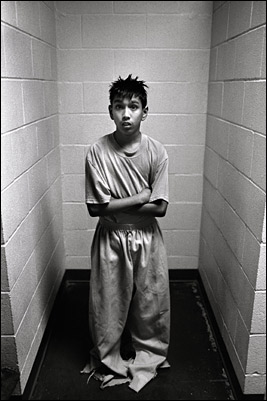
If children, as a group, make ideal targets for predatory abusers and exploiters, then incarcerated juveniles undoubtedly make the easiest of that targeted prey. Subject to manipulation and intimidation, with limited access to legal recourse or independent monitoring and underrepresented in the political system, these children are easily forgotten by the public. The pleas from juvenile inmates generally  goes unheard. The very real threat of retribution by the authorities is sufficient to prevent any victims from coming forward.

Sergeant Brian Burzynski
So, when incidents are reported- and followed up on by authorities- it is generally an exceptional case. 
In February of 2005, Texas Ranger Brian Burzynski received reports from a volunteer instructor at the West Texas School, a maximum security, all-male correctional facility in Pyote, Texas. One of many facilities scattered across the state, The West Texas school was built to house boys who had been in trouble with the law. The teacher who had contacted the Texas Ranger had had a crisis of conscience when several of his students had come forward with stories of sexual misconduct by the assistant superintendent. According to sources:
[The teacher] knew it would be futile to go to school authorities—his parents, also volunteers, had previously told the superintendent of their own suspicions, and were "brow beat" for making allegations without proof —so the next morning he called the Texas Rangers. A sergeant named Brian Burzynski made the ninety-minute drive from his office in Fort Stockton that afternoon. "I saw kids with fear in their eyes," he testified later, "kids who knew they were trapped in an institution where the system would not respond to their cries for help."
Initially, the Texas ranger was somewhat skeptical of the allegations. Burzynski would later explain that he knew as he headed out to investigate that there was a chance of false allegations because it was, after all, a prison, not a summer camp. But his prejudice faded after talking with several inmates; he was sure their stories were not made up — they were detailed, not vague, the stories were specific, not generalized.
For example, when a boy resisted one of the alleged abuser’s advances in 2004, he was shackled in an isolation cell for thirteen hours. Other employees had corroborated these statements. Instructors and employees noticed, for example, certain students being pulled out of class for no apparent reason and spending long periods alone with the principal. Inmates were also taken from the dorm rooms after hours despite regulations to the contrary. Even after being warned not to spend time alone with the juveniles in secluded areas, both of the staff members, School Principal John Paul Hernandez and assistant superintendent Ray Edward Brookins, continued their suspicious conduct. 

Many saw events that, while inappropriate or at least, questionable, were not conclusive in and of themselves. Circumstantial evidence was not proof. The isolation of the facility- in one of the most remote areas of Texas, as well as the fear of retribution- might explain why many saw things but reported little. In fact, as the Texas Ranger was soon to discover, if one chose to follow the chain of command, there was little hope of any immediate and direct action by the West Texas School administrators. The accused parties were also the ones in charge.
It was only when a thorough and independent investigation had been conducted that a pattern emerged. The Ranger’s investigation was the first wedge in breaking open what was going on in Pyote, Texas.

Texas Youth Commission Facilities
The West Texas School is an inaccurate, innoucuous name for the juvenile detention facility. True, it is a school but it is much more of a prison. The facility is part of a network of institutions that is under the control of the Texas Youth Commission (TYC). 
This agency is responsible for overseeing all youth correctional facilities in the state of Texas, that is, the care, custody and rehabilitation of the juvenile offenders who have been committed by the court. 


Here are some important facts and figures about the Texas Youth Commission. The ages of youth committed to TYC range from 10 to 17. The TYC can maintain custody of the youth until the age of twenty-one. With an annual budget of $251.6 million, TYC had, at that time 4,847 employees, 94 percent of whom worked outside of the central office in Austin. TYC had 4,805 youths in 15 TYC facilities, 9 TYC halfway houses, and 15 contract facilities. The facilities and halfway houses are located mostly in small, rural towns throughout Texas. Based on headcount, TYC had an average of 2,948 juvenile correctional officers (60.82 percent of all 4,847 TYC employees) and 350 case managers (7.22 percent of all 4,847 TYC employees) in fiscal year 2006. 
Surprisingly, perhaps, only 34 percent of those in juvenile detention are there for violent crimes. According to the National Prison Rape Elimination Commission, more than 20 percent of those in juvenile detention were confined for technical offenses such as violating probation, or for “status offenses” like missing curfews, truancy, or running away—often from violence and abuse at home. For the most part, these are not hardened criminals, and, sadly, most of them have already come from abusive situations before they arrived. 
As The Dallas Morning News’ Doug J. Swanson, who would later play a pivotal role in getting this story before the public reported on March 2, 2007:
About 60 percent of them come from low-income homes. More than half have families with criminal histories, and 36 percent had a childhood history of abuse or neglect. Some 80 percent have IQs below the mean score of 100."
Given these facts, one can see how explosive a charge of sexual misconduct might be and the amount of anxiety from agency administrators that exposure might create. Some people involved would soon be asking, “How bad will this storm be? Where will it lead and how far up will it go?”

A Lone Texas Ranger
Sergeant Brian Burzynski spent the next two months conducting a thorough investigation of the allegations, which included taking 44 witness statements, interviewing 74 prisoners and collected 354 pieces of physical evidence. By July 2005, he had identified 3 employees of the facility suspected of having sexual relations with the inmates. (Later, it would reduced to two.)
According to Languish.org,
When the TYC received Burzynski's findings, it launched its own investigation. The internal report this produced was deeply flawed. Investigators didn't interview or blame senior administrators in Austin, though many of them had seen the warning signs and explicit claims of abuse at Pyote. But agency officials saw how damning the story was. Neither their report nor Burzynski's was made public.
Burzynski then collected his findings and presented his conclusions to Ward County District Attorney Randall Reynolds in hopes of widening his investigation. While he waited for a response from the DA, Burzynski continued to gather evidence. For almost a year and a half, he waited, frustrated by the lack of action.
The Texas Ranger had this to say about his mounting frustrations- "In short, I had to file it with the local DA that I didn't want to in the beginning…He hasn't done anything with it and I am losing hope that he will before the statute of limitations expires."
U.S. Attorney General Alberto Gonzales
with Vice President Cheney
Burzynski tried repeatedly to call the DA’s attention to the report about his investigation starting back in April of 2005. He also sent a memo to Assistant Attorney General William Tatum asking for the Attorney General’s help. After a two day wait, the Ranger sent a reminder to Tatum. Tatum, in a brief email, re-directed Burzynski back to the local district attorney.
Then Burzynski emailed Texas Attorney General Greg Abbott and U.S. Attorney Johnny Sutton and U.S. Attorney General Alberto Gonzales. All denied that enough evidence to prosecute existed, when clearly Sgt. Burzynski had acquired a more than adequate supply of testimony and evidence. 

A few notes on the people above: 
A corporate lawyer for much of his career, Alberto Gonzales would be the subject of many controversies as President George W. Bush's Attorney General of the United States. Around the time of Burzynski's email, Gonzalez had just been appointed to the post. With the announcement of Supreme Court Justice Sandra Day's retirement, his name was floated as a possible nomination. This undoubtedly would have meant a great deal of scrutiny by both sides of the political spectrum. 
Greg Abbott
AG Greg Abbott, during this time, was more interested in other things. In March of that year, he was busy successfully defending the right of the state of Texas to display the Ten Commandments in front of the state Capitol in Austin United States Supreme Court case known as Van Orden v. Perry. 
(Incidentally, Abbott has continued with this attention-seeking self-promotion in Rick Perry's administration. For example, in 2010, AG Greg Abbott asked a federal appeals court to toss out the Environmental Protection Agency's finding that greenhouse gases threaten the environment. To that his opponent, Barbara Ann Radnofsky, remarked that Abbott was picking fights more for the sake of his political career instead of Texans — ignoring legitimate problems and diverting limited state resources into "loser litigation.")
Johnny Sutton was Bush’s former criminal policy director in Texas when Bush was governor, Sutton had been villified in the right-wing press for prosecuting two Border Patrol agents for shooting a fleeing Mexican drug-runner and then trying to cover the incident up. In just another example of Texas justice under Bush, Governor Bush, in one of his last acts in Texas before heading to Washington, commuted the sentences.

Johnny Sutton


Let's continue with the story. Burzynski was dismayed by the July 28, 2005 letter from Bill Baumann, assistant U.S. attorney for West Texas  in Sutton's office. In it, he stated his reasons for declining to prosecute on the grounds that under 18 U.S.C. Section 242, the government would have to demonstrate that the boys subjected to sexual abuse sustained "bodily injury." Baumann wrote that, "As you know, our interviews of the victims revealed that none sustained 'bodily injury.'"
Baumann's letter continued, adding a definition of the phrase "bodily injury," as follows: "Federal courts have interpreted this phrase to include physical pain. None of the victims have claimed to have felt physical pain during the course of the sexual assaults which they described." 
According to an article in WorldNetDaily.com,
Baumann wrote: "In order for the government to be successful in a criminal prosecution, it would be essential for us to show that the victim was in fact victimized. Most of the victims were aware of the power that the school principal and assistant superintendent held over them, but none were able to describe retaliative acts committed by either the principal or assistant superintendent. Although it is apparent that many students were retained at West Texas State School long after their initial release date, it would be difficult to prove that either Mr. Brookins or Mr. Hernandez prevented their release."
Likewise, despite volumes of evidence and countless interviews, , the U.S. Department of Justice Civil Rights Division declined prosecution in a letter written to Lemuel "Chip" Harrison, the superintendent of the facility on Sept. 27, 2005, the Texas Youth Commission superintendent at the West Texas State School. In that letter, Justice Department section chief Albert Moskowitz wrote that "evidence does not establish a prosecutable violation of the federal criminal civil rights statutes." 


In short, between the officials at the government agencies, the local district attorney, and the national department of Justice, not one felt they could lift a finger to stop the sexual abuse of children and teenagers. Not one of them felt that it was their duty or had a twinge of conscience when it came to the rape of a minor by a member of the staff of a state-run facility.
Not until January of 2007- when rumors began to surface in the press- did Reynolds finally act, sending a letter to the attorney general requesting prosecutorial assistance.
Still it would take until April 10, 2007 before the Attorney General Alberto Gonzales obtained indictments.

Certainly a lot of people who were in a position to do something, did nothing. According to one source, Alfonso Royal, a budget and policy analyst who oversaw the Youth Commission among other agencies, had been informed of the Burzynski report as early as Oct. 30 or 31, 2006. Royal had been forwarded graphic investigative reports about sexual abuse about the facility and did nothing. 
Some journalists have speculated that Royal sat on the information because of the potential negative fallout and its damaging effect on Perry’s reelection campaign. In fact, The Houston Chronicle reported that Royal may well have known about the details of the case as early as June 2005. For his part, Royal pointed fingers back at the local DA, Reynolds, for failing to press the case. Against all the evidence to the contrary, Governor Perry would later claim to Texas Monthly editor Evan Smith: "We knew about this probably about the same time you did, when we read it" in The Dallas Morning News. 
 Others were not so easily convinced by Governor Perry’s denial of responsibility. Matt Angle of Lone Star Project, a political research and policy analysis project,
If you read the letters from Sutton's office or from DOJ, it's really amazing what abuse they describe and then downplay as not being serious...They describe systematic and widespread abuse of juveniles who were held in these facilities by the people who were administering these facilities, and they acknowledge this fully, yet they determine that the evidence is not sufficient to warrant federal prosecution... This case developed right in the middle of Governor Perry's 2006 re-election campaign...I would speculate that the political powers in Texas and Washington in the Republican Party were not interested in this sex scandal coming to light. Sutton and Gonzales let their political responsibilities outstrip their legal responsibilities, and as a result you had children who were in danger of sexual abuse and were left in that danger.
Alarm Bells
It would not have been the first time that Texas Youth Commission facilities had been under scrutiny. In 1999, at the Coke County Juvenile Justice Center in Bronte, in West Texas settled a lawsuit for $1.5 million after several female juvenile detainees claimed they had been sexually abused by a facility employee, who was a convicted sex offender at the time he was hired.

More recent events involving another TYC facility should have suggested a need for closer inspection. In 2004, a serious riot at the Texas Youth Commission’s (TYC) Evins Regional Juvenile Center in Edinburg, Texas, amounted a near full-state take-over by the inmates. The event was over in a few hours but the retaliation by guards was particularly violent, according to lawsuits filed against TYC. Claims of excessive and often cruel punishments suggested an absence of oversight and proper training.

In 2005, the families of three incarcerated prisoners in Evins filed a $4.5 million federal lawsuit, claiming guards caused severe injuries by using excessive force when disciplining the detainees. One of the detainees, Calvin Barefield, claims he was left blind in his right eye after guards "grinded his face across the concrete sidewalk," scraping off the entire right side of his face. The lawsuit also alleged that guards had not been properly trained on how to use handcuffs or when to recognize medical emergencies.
Take this example from the Texas Observer, reported back on June 15, 2006:
(An inmate) alleges guards cuffed him and left him outside for several hours. When the skin on one side of his body turned red with sunburn, guards turned him over so the other side burned as well. Sanchez says he was lying on an ant nest and was bitten hundreds of times, but guards refused to move him. Medical examiners found injuries on many other boys, but investigators were unable to discover definitively when and how the damage took place, and did not confirm abuse... Eventually, more than 80 allegations of abuse would be filed; 11 were confirmed by TYC investigators.
One caseworker, Nelina Garza, who had been at the center for seven years, attempted to report misconduct.
Garza.. claims to have reported abuse to Evins administrators repeatedly over that long week, but says they ignored her. "There was really nobody to report to," Garza says. "They all knew, and they didn't care." Desperate, Garza began calling the parents of her caseload boys, telling them about the abuse and asking them to file complaints with TYC, which many of them did. Garza also called Hidalgo County law enforcement and filed an abuse report with Child Protective Services. Then she called the FBI, the Texas Rangers, and the local news station. "I was panicking," she says. "I couldn't sleep at night. I had to make it stop."
In fact, in June 9 2006, less than a week before the news reports, the US Department of Justice, Civil Rights Division, had informed Governor Perry of a investigation of allegations of misconduct (not of a sexual nature) at another juvenile facility. The Evins Regional Juvenile Center had been cited for serious violations in the confinement and treatment of residents. 
According to the letter sent to Texas government official (including Perry), by Assistant Attorney General Wan J. Kim,
In conducting the investigation we are obliged to determine whether there are system violations of the Constution of the United States in the conditions at Evin. Our investigation will focus on the protection of juveniles from harm.
The final report offered many warnings to the governor and to agency officials.
Virtually every correctional officer we interviewed expressed concern about maintaining control of the facility. As detailed above, we have found that this facility suffers from inadequate staffing, and that many of the staff at Evins have not been adequately trained nor do they have much practical experience on-the-job.
Following the revelations at the West Texas School, a subsequent State Auditors report on the TYC laid bare what some had always known but had done nothing about. Among the many problems the auditors found, the inability to prevent sexual predators from being hired seems to be most shocking. The report noted that the commission performed only computerized criminal history background checks on prospective employees using name and date of birth, rather then performing fingerprint checks. In addition, the commission did not have policies in place to prohibit TYC or its contractors working with youth from hiring convicted felons or sex offenders. 
Also, TYC conducted criminal history background checks only when employees are initially hired. This created the risk that an employee could be arrested subsequently without TYC’s knowledge. TYC did not have policies that prohibited it or its contractors that work with youths from hiring convicted felons or sex offenders.

The natural question, then, is why would any government official or agency administrator be willing to gamble with the public trust in such a way, hoping beyond common sense and common decency that the emerging scandal might be suppressed or possibly smothered and buried absolutely? Admittedly, in terms of a scandal, it was unparalleled. Homosexuality, juveniles, intimidation, violence amounting to abuse and all within a government-owned institution. Few in the higher levels of state government wanted anything to do with it. It was a career-destroying type of scandal and everybody seemed to be trying to find a way to distance themselves from the problem.

In fact, the most obvious reason goes beyond mere political expediency. Had the news of the goings-on at the West Texas School reached the public at the time it was first reported, it most certainly would have called into question one of Governor Rick Perry’s proudest talking points, the corner stone of his political agenda. That is, Rick Perry’s free market solution to budgetary shortfalls : the privatization of the public responsibilities of government. 


The West Texas School was one of many Texas Youth Commission's privately-operated incarceration centers. In other words, an example of Rick Perry's heavily touted market solutions to all of the state's financial woes. (Please see correction below)
The fact that the plan wasn't working was the last thing Rick Perry and his administration wanted to talk about, especially not with the governor's re-election looming on the horizon.
__________________

(Correction: It has been pointed out that the West Texas School, the focus of this scandal, was not privately-operated. I thank the reader for correcting this error. For example, last September, Mother Jones wrote about Governor Perry's plan to privatize the Texas prison health care system in 2003.
"Under the banner of closing the state's $27 billion deficit last winter, Texas Gov. Rick Perry floated a proposal to privatize the state's prison health care network. Whether the plan would actually save the state any money was a matter of debate, but one thing was clear: The move would have been a boon for private-prison executives and lobbyists, including Perry's former chief of staff, who had donated generously to his 2010 reelection campaign. "
The private companies had already had a poor history of problems. We can assume that an investigation of that scandal would have opened the doors to a larger review and increased scrutiny of other facilities in the TYC and the Texas prison system in general, many of which were privately-operated. And indeed, as the Houston Chronicle reported in October 5, 2007 that is what happened later in the case of Coke County Juvenile Justice Center, privately run by the GEO Group.  I appreciate the comment from one of our readers, who called my attention to this error. )
__________________________________
In Part two of this investigation, we will be taking a closer look at dismal manner in which the investigation and prosecution of the West Texas School case was handled by the Perry administration.


To Retweet: